
Which release matches your customer’s request?
Find the Chinese suffix on the pack
Look for 旅, 望, 惊 or 聚 beside the 151 title. These are 5-card single-pack references to help identify the release; use the exact box photos when ordering a box.
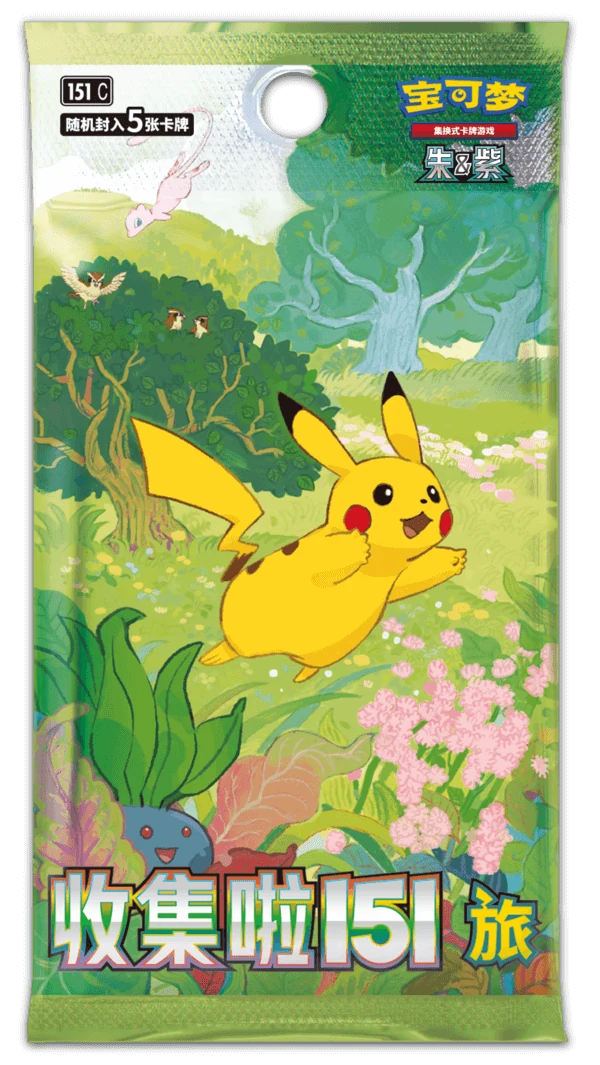
Collect 151 Journey收集啦151 旅
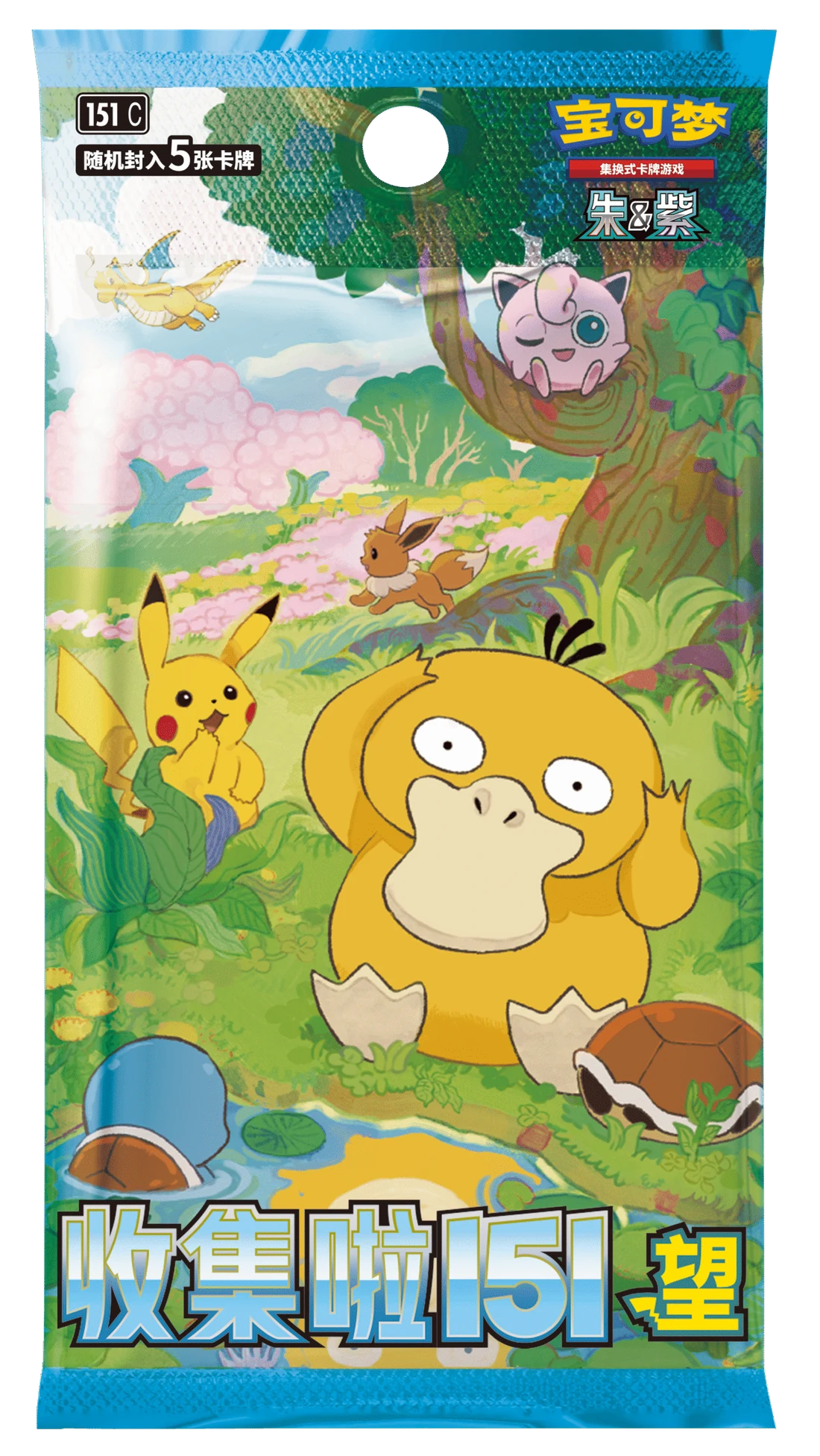
Collect 151 Hope收集啦151 望
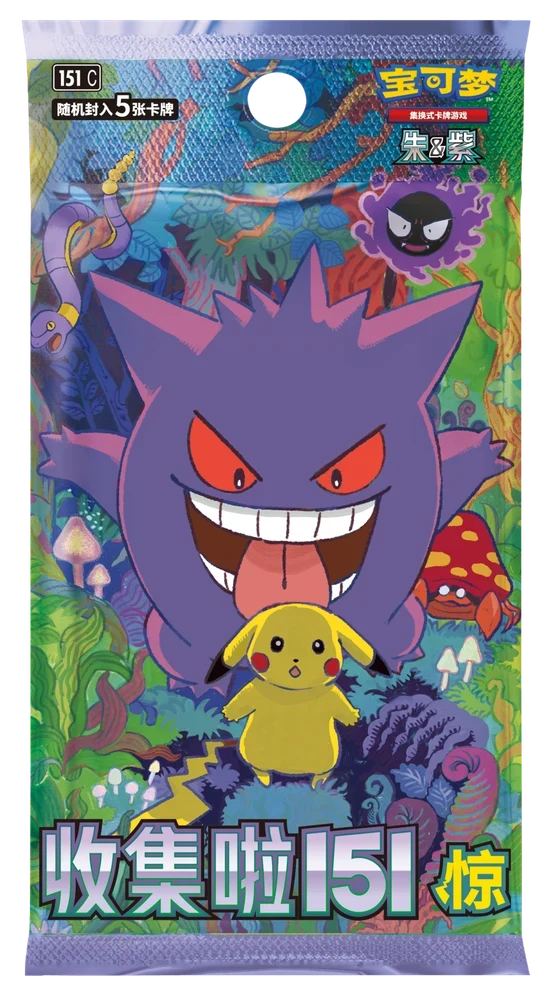
Collect 151 Surprises收集啦151 惊
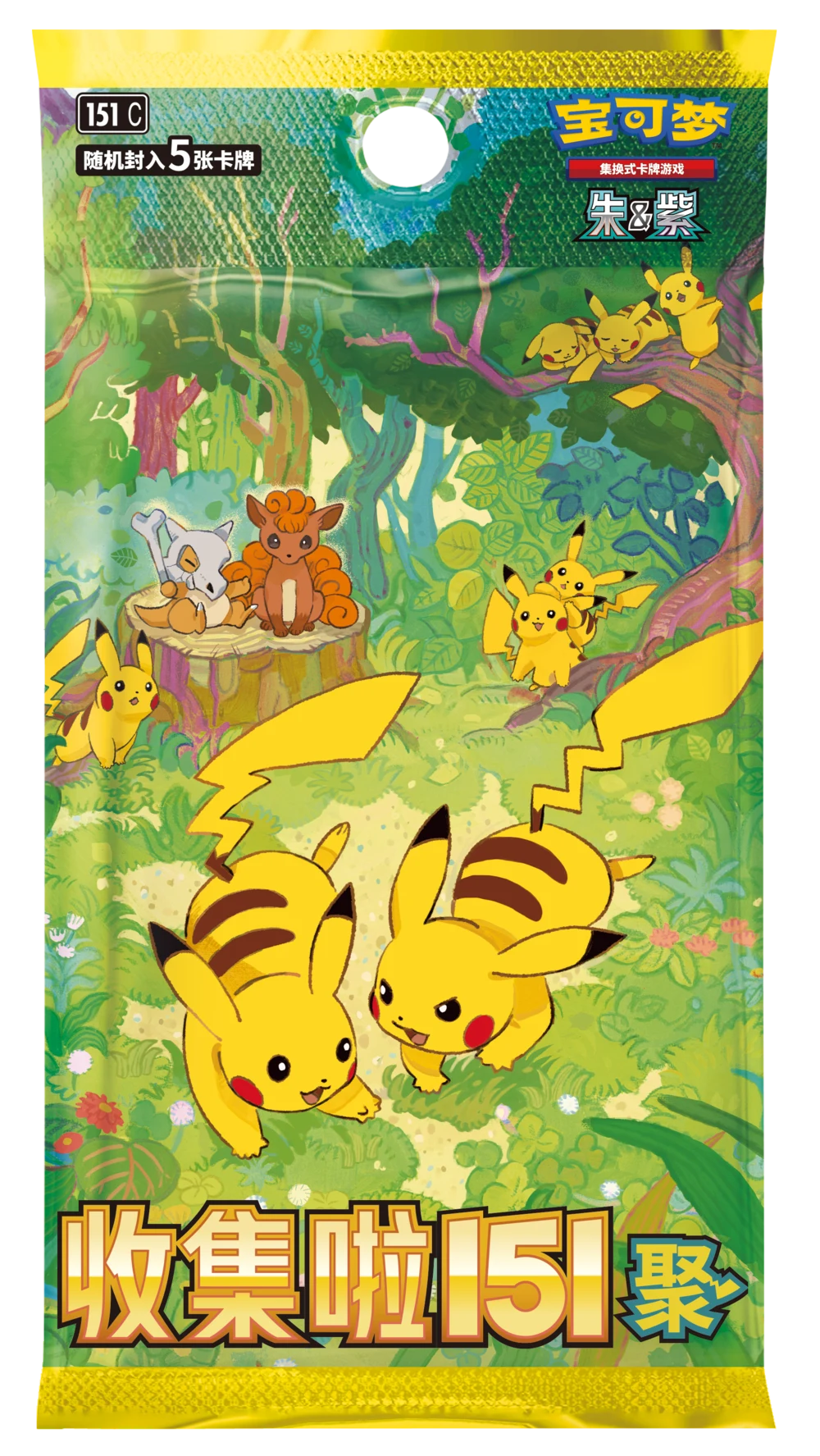
Collect 151 Gathering收集啦151 聚
For a card shop or livestream seller, “stock Chinese 151” is not a complete buying decision. In our directory, all four releases share 151C. Keep the Chinese subtitle, pack format and selling unit on each order line. The English names below identify the Chinese releases; they do not mean English-language cards.
Scroll the table sideways to compare all columns.
| Release | Chinese name | Mainland release date | Useful identification detail |
|---|---|---|---|
| Journey | 收集啦151 旅 | 17 Jan 2025 | The first release in the line |
| Hope | 收集啦151 望 | 18 Apr 2025 | Introduced another Pikachu AR illustration |
| Surprises | 收集啦151 惊 | 18 Jul 2025 | Pikachu with Gengar; Alakazam ex and Mew ex special illustrations |
| Gathering | 收集啦151 聚 | 17 Oct 2025 | Pikachu with Vulpix and Cubone; Zapdos ex special illustration |
These historical release dates identify the products, not current availability.
When a customer shows you a card, match its illustration and collector number to the exact release before suggesting a sealed product. Use the label on the product as well as the artwork. A box containing a chance at the requested card is a different offer from selling that card itself.
Box references by release and format: Journey, 5-card · Hope, 20-card · Surprises, 5-card · Gathering, 20-card.
Turn interest in a card into the right product question
A customer mentioning Pikachu or asking for a set list has not necessarily asked to buy a box. In an Elite Fourum 151 discussion, a collector asked about the set list and then clarified that they wanted only Porygon variations. That individual example is a useful countercheck before you turn card enquiries into sealed-stock purchases.
Ask: “Do you want that exact card, a few packs to open, or an unopened box of this release?” Show the Simplified Chinese text and your proposed selling price. Keep those answers separate. If the exact card is the only acceptable result, explain that buying random packs does not fulfil that request with certainty. Do not count it as demand for another box.
An older seller account also distinguished customers buying boosters for opening from those choosing complete collectible gifts. It concerns that seller’s experience with other products, not present demand for these four releases. Use the distinction to ask your customers a better question, rather than copying their product mix.
For your counter or stream, present the relevant offers with the release, language, sale unit and price together. A request for one pack and a request for a sealed box belong on different buying notes, even when both customers name the same illustration.
- Identify the target
Ask for the card image or number and the language the buyer wants.
- Match its release
Use Journey, Hope, Surprises or Gathering—not the shared 151C code alone.
- Explain the sealed offer
Name the pack or box. Random packs cannot promise the requested card. If only that card will do, do not count the enquiry as sealed-stock demand.
Choose the pack format for the sale you will run
Pokémon China's specifications for Hope, Surprises and Gathering list one foil in a 5-card pack and seven foils in a 20-card pack. Journey also has 5-card and 20-card formats; do not apply the other releases' foil counts to it.
For those three releases, four 5-card packs give four separate openings, 20 total cards and four foil slots. One 20-card pack gives one opening, 20 cards and seven foil slots. That is a difference you can explain to a customer; it is not a comparison of target-card odds or resale returns.
For sealed-box sales, keep the box unopened and state its exact pack format. Agree the exterior condition your customer expects. A request for a complete box cannot be filled by the same number of loose packs without the customer agreeing to a different product.
For pack sales at the counter or on a stream, confirm packs per supplied box before deciding how many sales it can support. State whether the customer receives an unopened pack or buys an opening shown live. Keep those offers explicit. The loose-pack guide covers source records and moving one box into pack stock.
Compare the intended pack price with its share of the delivered buying cost and your selling and fulfilment costs. A 20-card pack may need a different selling price and explanation from a 5-card pack; more cards alone do not tell you what your viewers will pay. Test the actual offer before buying equal quantities of both formats.
When should a complete gift be a separate stock line?
A customer buying a character gift may want the included card and accessories, while another wants only boosters. The official First Partners specification pairs Bulbasaur with Surprises, Charmander with Gathering, and Squirtle with Hope. Each complete gift contains its named illustration card, sleeves, a storage box and a six-pack box of the corresponding 20-card boosters.
Keep the outer gift identity beside the booster release in your listing. Someone asking for the Bulbasaur gift is buying a different product from someone asking for Surprises packs, even though the gift contains that release. Show the complete item and explain what quantity one buys.
If the customer does not want the included card or accessories, compare the matching booster product instead of buying gifts simply to make the shelf look fuller. If the complete gift is what they want, protect its presentation and sell it as that unit. The gift-box selection guide covers choosing variants and sets.
The documented six-pack count belongs to those gift contents. Confirm the configuration of a separately quoted booster box; do not use a gift specification to assume every box or case count.
Do you need all four releases on your shelf?
Only if you have a reason to sell each one. A complete product range is not automatically a useful first order. Start with the requests you can turn into clear offers, the quantity you can fund if sales are slow, and the units the supplier can actually quote.
For each proposed line, keep a short record: release → pack format → selling unit → intended retail price → requested quantity → completed sales → stock still free to sell. Separate casual questions from paid purchases and original boxes from the packs you remove from them.
For example, if Surprises packs sell but Gathering boxes receive only questions, do not automatically reorder both in equal amounts. Find out whether the obstacle is the release, the box-sized commitment or the price of that exact offer. If few relevant customers saw the Gathering offer, show the stock you already have again with its language, pack format and full box price clear before judging the release. Otherwise, change one part of the next offer so its result is interpretable. This is a decision method, not a claim that one release sells better.
Keep any box promised intact to a customer out of your live-opening stock. After a show, update available packs and boxes before asking for more. The reorder guide helps turn repeat sales, remaining stock and incoming deliveries into a buying quantity.
Request a quote you can turn into a customer offer
Use the exact line you plan to sell. For example:
Could you quote Simplified Chinese Collect 151 Surprises / 收集啦151 惊, 5-card-pack booster boxes, for resale? I plan to sell [unopened boxes / individual packs] through [my shop / online store / livestream]. Please confirm packs per supplied box, quantity available, goods and freight for [quantity and destination], and expected handover.
If the quote is for a case, confirm its box count before calculating cost per saleable box or pack. Keep another release or format on a separate line. The box-offer comparison guide helps compare like-for-like costs; the first resale order guide covers the remaining order details.
Before listing, make your product name, picture, quantity-one description and physical stock agree. The result should be an offer you can explain and fulfil—not just a collection of four familiar release names.