What did your customer actually choose?
Your supplier cannot currently provide the Simplified Chinese box you wanted. Another product is available at a similar price. Before taking it, ask whether your customer chose that exact release or simply wanted a suitable sealed product to open.
An online retailer fulfilling a named product order should keep that identity fixed unless the customer agrees to a change. A card shop choosing fresh shelf stock has more flexibility: it can present an alternative as a different product and let customers decide. A livestream seller needs to check what the show promised before switching.
The same replacement can therefore be suitable for an uncommitted shelf position and unsuitable for an order already placed.
Shared branding does not make the same release
Collect 151 is a useful example. Pokémon China's official announcement treats 收集啦151 惊, usually called Surprises, and 收集啦151 聚, Gathering, as distinct releases. It describes different featured Pikachu illustrations and offers 5-card and 20-card pack formats for both.
If the customer requested Surprises specifically, Gathering does not become an equivalent box just because both say “151”. Likewise, a 20-card-pack box is not the same purchase as a box of 5-card packs. Changing the format changes what the customer opens and the unit you offer for sale.
Use the 151 identification guide to name the original and proposed products clearly. Do not promise comparable pulls from similar packaging or foil counts.
For example, write the proposed change as “Surprises, 5-card-pack booster box → Gathering, 5-card-pack booster box.” Keeping the pack format does not preserve the release. If the original reason was a Surprises-specific card or a missing sealed Surprises box, decline that replacement. If the customer simply wanted a different Simplified Chinese opening and accepts Gathering, confirm its packs per box, price and quantity as a new offer.
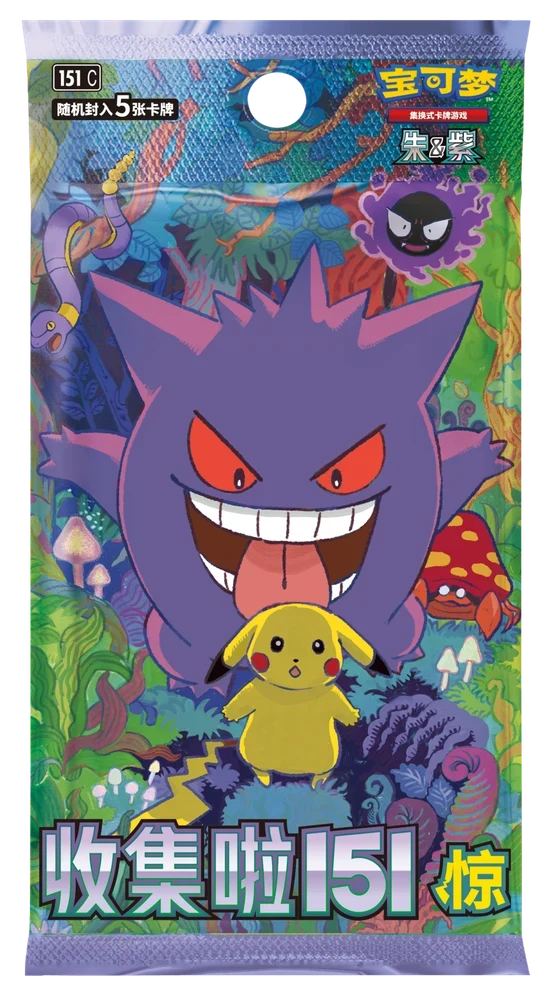 Customer asked for Surprises 惊
Keep the exact requested release and format on the original line.
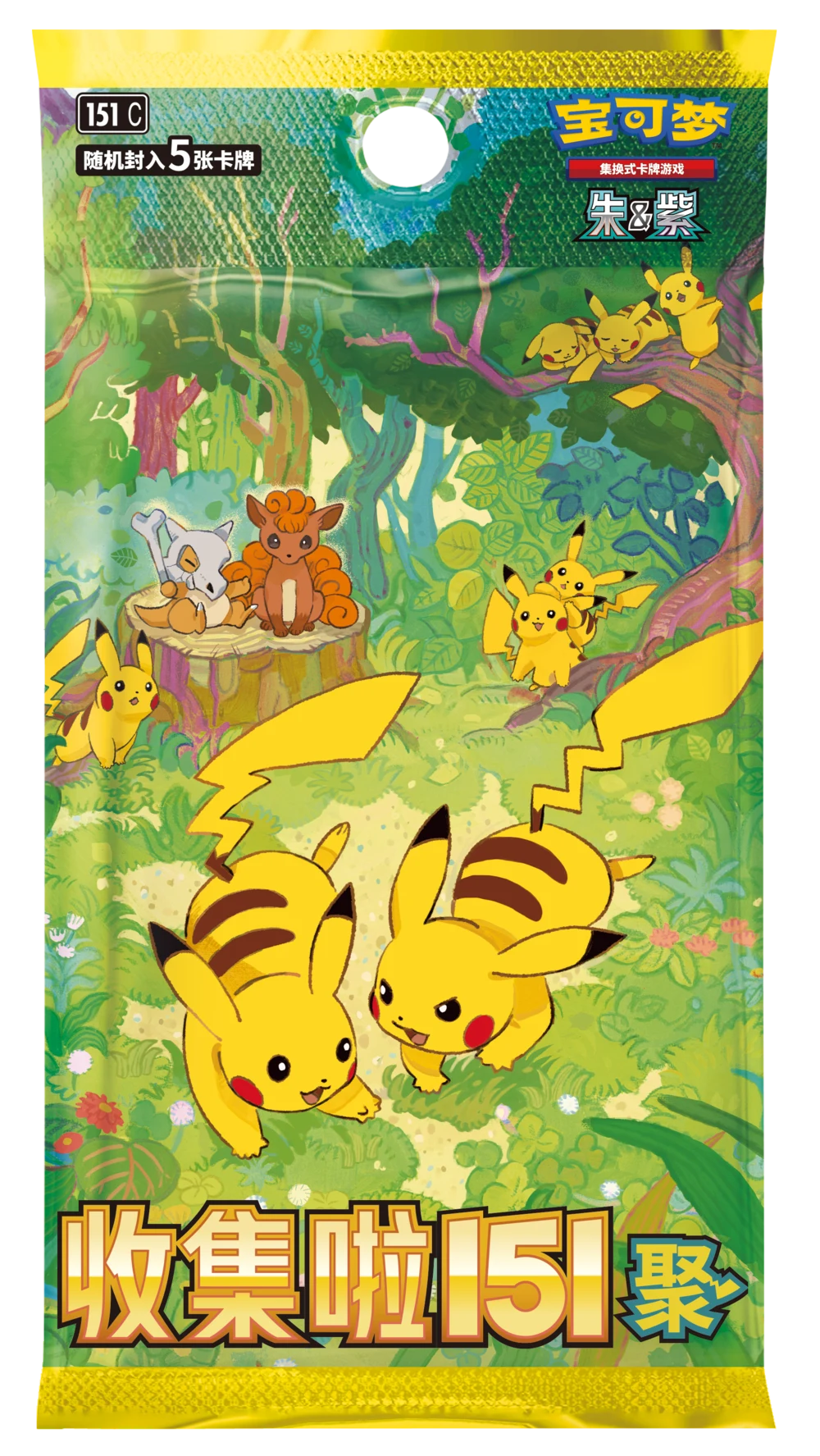 Supplier offers Gathering 聚
Explain what changes. A shared 151 logo is not approval.
Offer the alternative only after checking which part of the original request the customer can change.
5-card pack references illustrate release identity, not interchangeable contents or stock.Offer an alternative where the customer is flexible
A buyer who wants to try a new Simplified Chinese opening may be open to another release. A sealed collector completing a particular run may prefer to wait. A public collector discussion shows this distinction in another setting: some welcomed a different language for the artwork, while another preferred saving for the edition they wanted. It demonstrates differing priorities, not a preference shared by all collectors.
For your own customer, ask which requirement can change: release, packaging format, quantity or timing. Then show one suitable alternative with the difference stated plainly. Do not turn a conversation about an unavailable box into an unrelated assortment merely to fill the shipment.
Check what the replacement lets you sell
For a shop reselling complete boxes, compare the actual boxes and their condition requirements. For a seller opening boxes into pack stock, compare cards per pack and confirmed packs per box before setting the number of sale listings. For a customer buying an intact original case, individual boxes are not an equivalent case.
Compare the new quote only after those differences are clear. A similar total price can buy a different number of retail units. If the alternative needs a new listing, different photographs or a different show description, make those changes before offering it.
If it no longer supports the original selling plan, reduce or omit that order line instead of treating every available product as a substitute.
Leave an explicit substitution decision
Our team can suggest alternatives when a product is unavailable. Ask for the proposal as a separate line, with its name, SKU, format, buying unit and current quote.
A useful instruction is:
Keep [original product] unchanged unless I approve a replacement. My customer needs [fixed requirement]. I can consider changing [flexible requirement]. Please show the exact alternative and explain what changes in the box, pack format and quoted quantity.
Keep the original and proposed lines visible until the decision is made. Record the accepted product, quantity, price and timing in the order confirmation; for an order already placed by your customer, obtain their agreement before dispatching a different item. Approve the supplier’s replacement only after checking that it still fits the sale. If the customer insists on the original release, request an update on that product and keep the order unfilled rather than making a silent switch. Waiting is a valid choice; an unknown restock date should remain unknown.
- A particular card or release matters
Keep the exact item; wait or decline if the replacement cannot meet it.
- The pack-opening offer is flexible
Confirm the new release, format, quantity, price and delivery before acceptance.
- The revised shipment misses the sale
Change the plan before promising the alternative to buyers.