
Give the new product a job on your shelf
Before adding another language, finish this sentence: “My customer would choose this product because…” The answer should describe a purchase: a Squirtle gift, a specific box to open, or a sealed product within a spending limit. “Chinese Pokémon is getting attention” does not tell you which item to order.
If you already run a card shop or sell live, seeing another seller offer Simplified Chinese products can give you an idea to test. Before asking how to open a trade account or planning a restock, identify which of your own customers might choose the new item. Another seller’s range is a starting point for that question, not the answer.
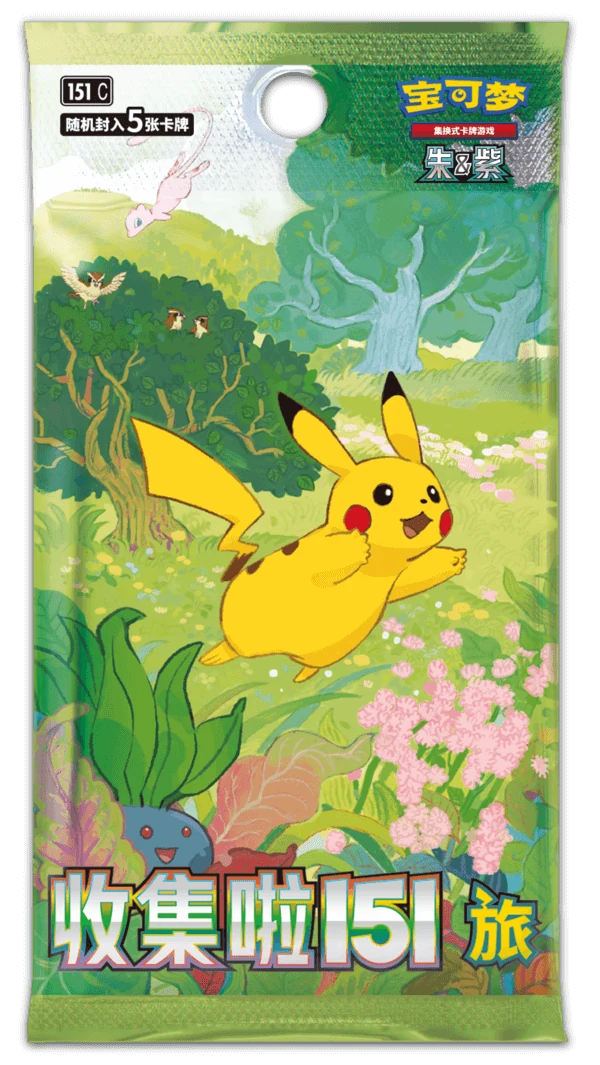 A named pack opening
Journey 旅 · 5 cards. State the language and price for one sealed pack.
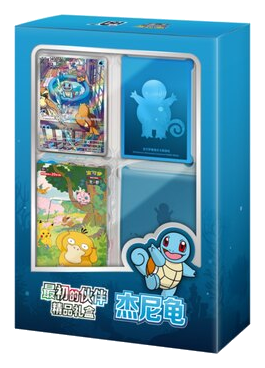 A complete character gift
Squirtle gift · show the whole gift and its included Hope booster format.
Ask which complete offer the customer would buy at your intended price.
Illustrated shelf choices using existing product references. No current-stock or demand claim.Offer something the customer can point to
In one public collector discussion, participants described buying Chinese cards for particular Pokémon and for opening enjoyment. Those individual accounts suggest questions to ask your own customers; interest in a single illustration does not automatically become demand for a sealed box.
A gift can make the distinction more concrete. Pokémon China’s First Partners announcement describes character-specific cards and matching accessories alongside boosters. A customer wanting that complete gift has a different reason to buy from someone seeking only more packs. Show the product and its included items, then ask which part matters. Do not assume that a familiar Pokémon settles the language choice.
Check whether the retail price adds a real choice
Compare the amount your customer would actually pay for the proposed product with the English or Japanese product they would otherwise buy. Keep the exact contents visible. A cheaper box with a different number or type of packs is a different offer, so explain the opening experience rather than advertising a like-for-like discount.
Work backwards from a retail price you are prepared to test, allowing for your landed buying cost, selling fees, packing and any delivery cost you cover. Then ask whether the remaining price difference is meaningful to the customer. If your final ticket is close to their preferred English product, the Chinese item needs another attraction. Compare the actual offers rather than ranking price by language alone.
Test a choice, not a vague promise
Prepare two short product cards for your counter or online audience: the proposed Simplified Chinese item and the alternative you already sell. Give each its language, exact product, selling unit, contents and intended retail price. Ask customers which they would choose and what would stop them. Keep a request for a particular character separate from a general comment that the packaging looks good.
Use those answers to choose a small, clearly defined offer you can afford to hold if it remains unsold. When you have stock and offer it for sale, record paid purchases separately from questions and likes. Note whether the buyer added the Chinese product to their usual purchase or chose it instead. That distinction tells you whether you are widening the range or shifting the same spending.
Make the question specific: “Would you choose this complete Simplified Chinese Squirtle gift at [your proposed price], or this [named alternative] at [its price]?” A request for the included Squirtle card alone is a different answer from a request for the complete gift. Record that difference before buying sealed gifts to satisfy a singles request.
Before the trial, set a review point such as the end of two planned shows or a chosen counter-sale period, plus the maximum stock cost you are willing to leave tied up. These are your test limits, not expected sales rates. At that point, compare purchases at the tested price, remaining units and the cost of fulfilling the sales. If customers only liked the picture, or the sale leaves too little after your costs, pause the reorder and change the offer before buying more.
- Name the offer
Release, language, pack or gift, selling quantity and price.
- Record the response
Keep questions and preferences separate from paid purchases.
- Review the same unit
Which named offer sold, what remains, and what did fulfilment cost?
Keep a reason to leave it out
A separate language discussion includes a collector who prefers English because most of their collection is already English. The thread mixes Simplified and Traditional Chinese products, so it cannot establish a price rule for this range; it does show why enthusiasm elsewhere may not transfer to your shop.
If customers want only their existing language, or one specific card rather than a sealed product, do not force a box trial to answer the wrong question. Keep serving that demand. If a clear product choice emerges, use the first-order guide to specify the purchase. The useful result is a range with a reason to exist, even if that means adding only one line.